Boook: Speech Learning Stories
- 0.0
- Rating
- 50.00K
- Installs
- Free
- Price
 Analysis by App-foxy
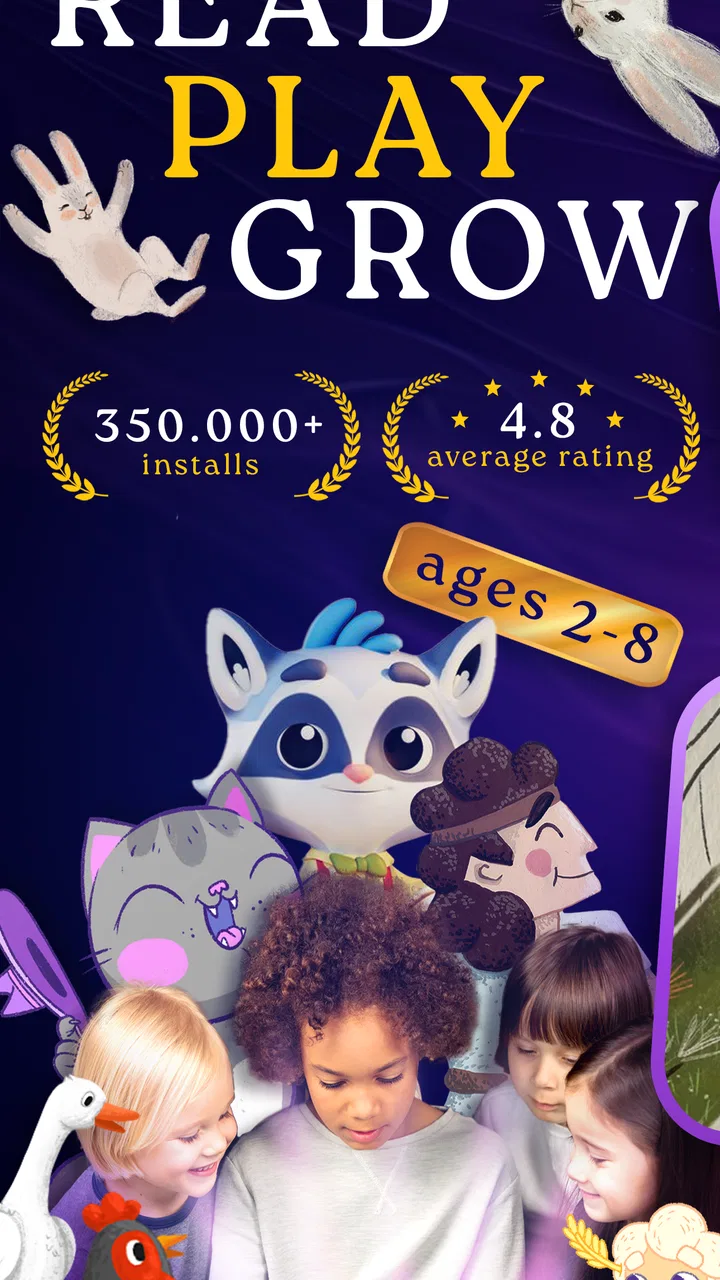
Boook: Speech Learning Stories is the kind of children’s educational game that makes a strong first impression because it turns early reading practice into something that feels closer to playtime than homework. I found its focus easy to understand: children work with speech and phonics through interactive activities and story-based reading. That combination gives parents a gentler way to introduce practice, especially when a child loses interest quickly with worksheets or repetitive drills.
What matters, though, is whether the appeal survives the first few enthusiastic sessions. A bright educational game can attract attention for a week and then become another unused icon. My experience with this title suggests that its lasting value depends less on novelty and more on how deliberately an adult builds it into a routine. It can be useful, but it works best as a short, supported practice tool rather than a complete replacement for reading together, conversation, or formal instruction.
How Boook: Speech Learning Stories feels in everyday use
In everyday use, I’d treat Boook as a short prompt for shared practice, not a screen to leave running while a child plays alone. I’d pay attention to whether a sound or story detail resurfaces later in conversation; that gives a more useful signal than simply finishing an activity. With that practical lens in place, the next question is how the game fits into a family’s routine without turning learning into pressure.
You May Also Like

 Blood Strike: 2.5 Anniversary
Blood Strike’s Loadouts Turn Every Drop Into a Tactical Gamble
A close look at Blood Strike’s custom loadouts: how fast access to signature weapons reshapes its battle royale rhythm, rewards preparation, and narrows the gap between fights.

 Pandora - Music & Podcasts
Pandora’s Music Is Easy to Start, but Harder to Recover
Pandora’s strength is its low-effort path from a seed to a station. Its weak spot is how much confidence it asks you to place in connection, setup, and quiet recovery.

 8 Ball Pool
 Is Built on Rivalries, Rematches, and Routine
A close look at the rivalries, rematches, shared routines, and unanswered safety questions that turn a quick pool match into a persistent mobile community.

 Samsung Music
’s Quiet Strength Is Playing What You Already Own
Its reach comes less from spectacle than from dependable access to a personal library. That simplicity is both the app’s strongest retention engine and its ceiling.

 AccuWeather: Weather Radar
AccuWeather Review: A Quick, Clear Forecast for Everyday Decisions
For everyday plans, the best forecast is the one you can understand quickly. AccuWeather makes rain timing, radar, and local conditions easy to act on, with a few trade-offs.

 Hill Climb Racing
Why Hill Climb Racing Still Turns Crashes Into One More Run
A tiny car, a bumpy hill and one more upgrade: Hill Climb Racing keeps resurfacing because its simple chaos makes every near-miss feel personal.
More From Our News Desk
View All News


A friendly first week for early learners
The opening appeal comes from the subject matter itself. Phonics can feel abstract to a young child, while a story gives those sounds a reason to exist. Instead of asking a learner to treat every exercise as a test, the app places speech and early reading inside a more inviting setting. That is a sensible design choice for children who respond better to characters, narrative progress, and small moments of interaction than to isolated flashcards.
I would introduce it in a calm, brief session rather than handing over a device without guidance. Sitting beside a child during the first few activities helps in two ways: the child understands what to do, and the adult can notice whether the speech work is genuinely helping or merely keeping the child busy. When a child says a sound incorrectly, I would pause and repeat it naturally instead of turning the moment into a correction-heavy lesson.
The app is free to start, which lowers the barrier for families who want to test the approach before spending anything. It is aimed at Everyone, and that broad age classification makes it suitable as a family-friendly download, but parents should still judge the material against their child’s actual reading stage. A label intended for all ages does not mean every activity will fit every beginner equally well.
One useful first-week routine is to let the child explore independently for a few minutes, then ask them to explain one sound or word from the session. That small conversation reveals more than watching the screen alone. If the child can connect the sound to a word outside the game, the activity has begun to transfer into real learning. If the child remembers only tapping and moving forward, the adult may need to slow the pace.
Where the story format helps, and where it does not
Stories can reduce the emotional resistance that often surrounds reading practice. A child who says “I do not want to read” may be more willing to follow a character or listen to a short scene. The narrative framing also gives parents a natural stopping point: finish a small part, talk about it, and return later. That is much easier to maintain than promising a long lesson every evening.
There is a trade-off. Story-led activities can make practice feel pleasant, but enjoyment alone does not guarantee mastery. Children still need time to repeat sounds, blend them, recognize patterns, and eventually read without digital support. I would use this game to open the door to those skills, then reinforce them with picture books, spoken word games, and shared reading away from the device.
This is especially important for a child who needs precise, individualized help with speech. An app can provide repetition and encouragement, but it cannot watch mouth position, respond to every pronunciation difference, or adapt like a specialist. If speech concerns are significant, I would treat the game as an extra activity and not as the main intervention.
Building value beyond the first burst of novelty
After the first week, the central question becomes simple: can a parent make the app part of a repeatable habit without creating arguments? I prefer a predictable slot, such as a few minutes after a snack or before a shared bedtime book. The exact time matters less than the cue. When the activity follows something already happening, it is less likely to depend on a child remembering or a parent finding spare energy.
I would also avoid presenting every session as a performance. Asking a child to demonstrate everything they learned can make the game feel like an exam. A better approach is to choose one small takeaway, such as a sound heard during play, and notice it later in ordinary life. Pointing out that sound on a cereal box, street sign, or book cover creates a bridge between the app and the world around the child.
That bridge is one of the less obvious strengths of a phonics game. Its value is not limited to what happens on the screen. Used carefully, it can give an adult prompts for conversations: “Can you hear that sound in this word?” or “What part of that story did you remember?” The app becomes a starting point for practice rather than a closed activity that ends when the device is put away.
Families should also decide in advance how they will handle the optional spending. The game is free, while in-app purchases range from around five dollars to around forty dollars per item. I would not make a purchase during a child’s excited first session. Waiting lets the adult judge whether the child returns voluntarily, whether the activities support the right level, and whether the added value would improve a routine that already works.
What keeps month-to-month use practical
Long-term use is strongest when the game fills a specific gap. For a child who needs a low-pressure way to revisit speech sounds between reading sessions, it may remain useful. For a family already using several learning tools, it can serve as a change of pace rather than another compulsory assignment. The mistake would be expecting one app to carry the entire burden of literacy development.
I would rotate the emphasis around it. One day might involve a short in-app activity followed by reading a physical book. Another day could use the app only as a reminder of a sound, followed by a word hunt around the home. This prevents the screen from becoming the only place where the child encounters reading and gives the learned material more chances to stick.
The developer is AG Softworks LTD, and the game had reached over fifty thousand installs by the time I reviewed it. That gives it a meaningful user base without making it feel like an unavoidable mainstream choice. Its current version is 3.4.1, and it requires Android 10 or later, so families using older devices should check compatibility before planning around it.
Those technical details affect maintenance more than they first appear to. A child’s learning routine can be interrupted by an incompatible tablet, limited storage, or an adult who assumes an older device will handle the game. I recommend checking the device before promising a new daily habit. A smooth routine is valuable; a routine that begins with troubleshooting usually loses momentum quickly.
The maintenance burden for parents
The game itself may be easy for a child to open, but educational value still needs adult maintenance. Someone has to decide when it is used, observe whether the child is progressing, and connect the activity to real reading. That is not a criticism unique to this title; it is the reality of most learning games. The difference is whether the app makes that adult role manageable.
In this case, the manageable approach is to keep sessions short and purposeful. I would not leave a child playing until they lose interest and then call that a lesson. A parent can set a simple goal before opening the app: practice a sound, complete one story segment, or explain one new word. The goal should be small enough that stopping feels like success rather than interruption.
Another practical habit is to keep a mental note of recurring trouble spots. If a child repeatedly struggles with the same sound, the next session should not simply become longer. It may be better to stop, say the sound together, find examples in a book, and return later. This prevents the game from turning repetition into frustration and helps the adult distinguish lack of understanding from ordinary tiredness.
Parents should also watch for the difference between recognition and independent reading. A child may appear successful when prompts, images, or familiar story context are present. To check whether learning is transferring, ask them to identify a sound in an unfamiliar word or read a simple word from a book. If that step is difficult, the app is still useful as practice, but the family should add offline reinforcement rather than increasing screen time.
Why fatigue can appear after the excitement fades
The main source of fatigue is repetition without visible personal progress. Even a pleasant story format can become predictable if a child feels they are revisiting the same kind of task without a new challenge. Parents can reduce that feeling by alternating the game with physical books, drawing, sound-based conversation, or a short movement break. Variety makes the routine feel intentional rather than endless.
Another source is adult overuse. Because the app is convenient, it is tempting to rely on it whenever a child needs practice. That can weaken its appeal and narrow the child’s learning experience. I would rather use it several times as a focused prompt than make it the default entertainment whenever the device is available.
There is also a financial fatigue point. Optional purchases can complicate a child’s sense of ownership, particularly if they begin asking for more content before the family has established a useful routine. I would decide what spending limit feels comfortable and keep the decision with the adult. The free starting point is valuable precisely because it allows a family to evaluate habits before committing money.
For children who dislike guided digital activities, this may not be the right fit no matter how carefully it is introduced. Some learners prefer a parent’s voice, magnetic letters, printed books, or movement-based games. Others may need a more systematic curriculum with clearer progression and stronger reporting for adults. In those situations, a dedicated reading program, teacher-led support, or specialist advice could be a better primary choice.
How it compares with ordinary alternatives
Compared with a standard phonics worksheet, this game has an obvious advantage in approachability. A story and interactive activity can make a reluctant learner more willing to begin. It is also easier to use during a short transition in the day than setting up a full table-based lesson. For travel or waiting rooms, that convenience can be genuinely helpful when used with a clear limit.
Compared with a physical picture book, it offers more immediate interaction but less natural room for conversation unless an adult adds it. A book lets a parent adjust the pace, skip ahead, revisit a page, and respond to a child’s questions without the structure of an app. I would not choose between them. The strongest routine uses the digital activity to spark interest and the book to deepen language, imagination, and shared attention.
Compared with a formal literacy platform, Boook: Speech Learning Stories appears better suited to casual reinforcement than to detailed progress management. Families looking for a complete course, extensive parent dashboards, or a tightly sequenced teaching plan should examine alternatives designed specifically around those needs. This title makes more sense for a child who needs an inviting entry point or a change from conventional practice.
Its free access also changes the comparison. A family can try the basic experience without immediately paying for a subscription, then judge whether the child returns to it. That is a healthier decision process than buying based only on attractive graphics or a promising description. The important test is not whether the child enjoys one session, but whether the activity earns a regular place in the week.
Who should keep it installed
I would recommend it to parents of early learners who want to make speech and phonics practice less intimidating. It is particularly suitable when a child enjoys stories, needs short sessions, or responds poorly to worksheets. It can also help grandparents or babysitters offer a structured educational activity, provided they sit nearby and talk about what the child is doing instead of treating the app as silent supervision.
It is less suitable as the only tool for a child with persistent speech difficulties, advanced reading needs, or a strong dislike of screens. It may also disappoint families expecting a complete curriculum that measures every stage of progress. Those users would be better served by professional guidance, a more comprehensive reading system, or a deliberately offline approach.
My most useful tip is to judge it by what happens after closing the app. Can the child recognize a practiced sound in a new word? Can they retell part of a story? Do they ask to read another book? Those signs matter more than how long they stay engaged. A short session that leads to real-world reading is more valuable than extended tapping with no transfer.
My long-term verdict
Boook: Speech Learning Stories earns a place as a supporting tool, not as a full literacy solution. Its strongest quality is the way it gives early phonics and speech practice a warmer, more approachable setting. The free entry point makes experimentation sensible, and the story angle can help families create a routine that feels lighter than formal study.
Its lasting value depends on maintenance. Parents need to keep sessions purposeful, watch for frustration, connect digital practice to books and conversation, and avoid assuming that screen success equals independent reading. If that small amount of involvement is realistic for your household, the game can continue to be useful after the first-week novelty fades.
My final recommendation is to try it as one part of a balanced reading habit. Give it a fair first week, then reassess after the child has used it alongside offline activities. The real test is not whether it entertains a child once, but whether it helps create repeatable reading practice. For that specific role, I think this educational game is worth keeping available, especially for families who need a friendly starting point rather than a demanding all-in-one course.
FAQs for Boook: Speech Learning Stories
01What is Boook: Speech Learning Stories?
Boook: Speech Learning Stories is an educational reading app designed to help children develop speech, language, and early literacy skills through interactive stories. It combines narrated content, visual elements, and learning activities to make reading more engaging. The app is intended to support practice at home, although it should complement—not replace—guidance from a parent, teacher, or speech-language professional.
02Who can benefit from Boook: Speech Learning Stories?
The app is mainly suitable for young children who are building vocabulary, improving listening comprehension, practicing pronunciation, or becoming familiar with basic storytelling. It may also be useful for children who need extra repetition and encouragement while learning language skills. Because children develop at different rates, parents should review the recommended age range and decide whether the stories and activities match their child’s abilities.
03Does Boook work without an internet connection?
Offline availability can depend on the specific story, feature, or subscription plan. Some content may need to be downloaded in advance, while updates, account functions, or newly added material may require an internet connection. Before traveling or giving the device to a child without Wi-Fi, open the stories you plan to use and confirm that they load correctly offline.
04Is Boook: Speech Learning Stories free to download?
The app may be available to install at no initial cost, but certain stories, learning tools, or extended content can require in-app purchases or a subscription. Pricing, trial periods, renewal terms, and included features may vary between Android and iOS. It is important to check the store listing and subscription screen carefully before confirming payment, especially when setting up the app for a child.
05Is Boook suitable for independent use by children?
Boook is designed to be approachable for children, but younger users will usually benefit from adult supervision. Parents can help explain unfamiliar words, repeat activities, and connect the story lessons with everyday conversation. Adults should also review privacy settings, notifications, purchase protections, and any account requirements. If a child has a diagnosed speech or language difficulty, professional advice should guide how the app is used.
Pros
- Short stories make language practice feel more engaging than drills.
- Audio narration helps users connect written words with natural pronunciation.
- Useful for building vocabulary through repeated exposure in context.
- Suitable for learners who prefer relaxed
- self-paced study sessions.
- Story-based lessons can improve reading confidence over time.
Cons
- The story selection may feel limited for advanced learners.
- Some useful learning features may require a paid subscription.
- Audio speed and playback controls may not suit every learner.
- Progress tracking may be less detailed than in dedicated language apps.
- Beginners may need translations to understand more difficult passages.

Boook: Speech Learning Stories
Gallery